Viñedo Ain KarimWine and tourism
First we kept their WordPress alive; then we built the platform the business needed
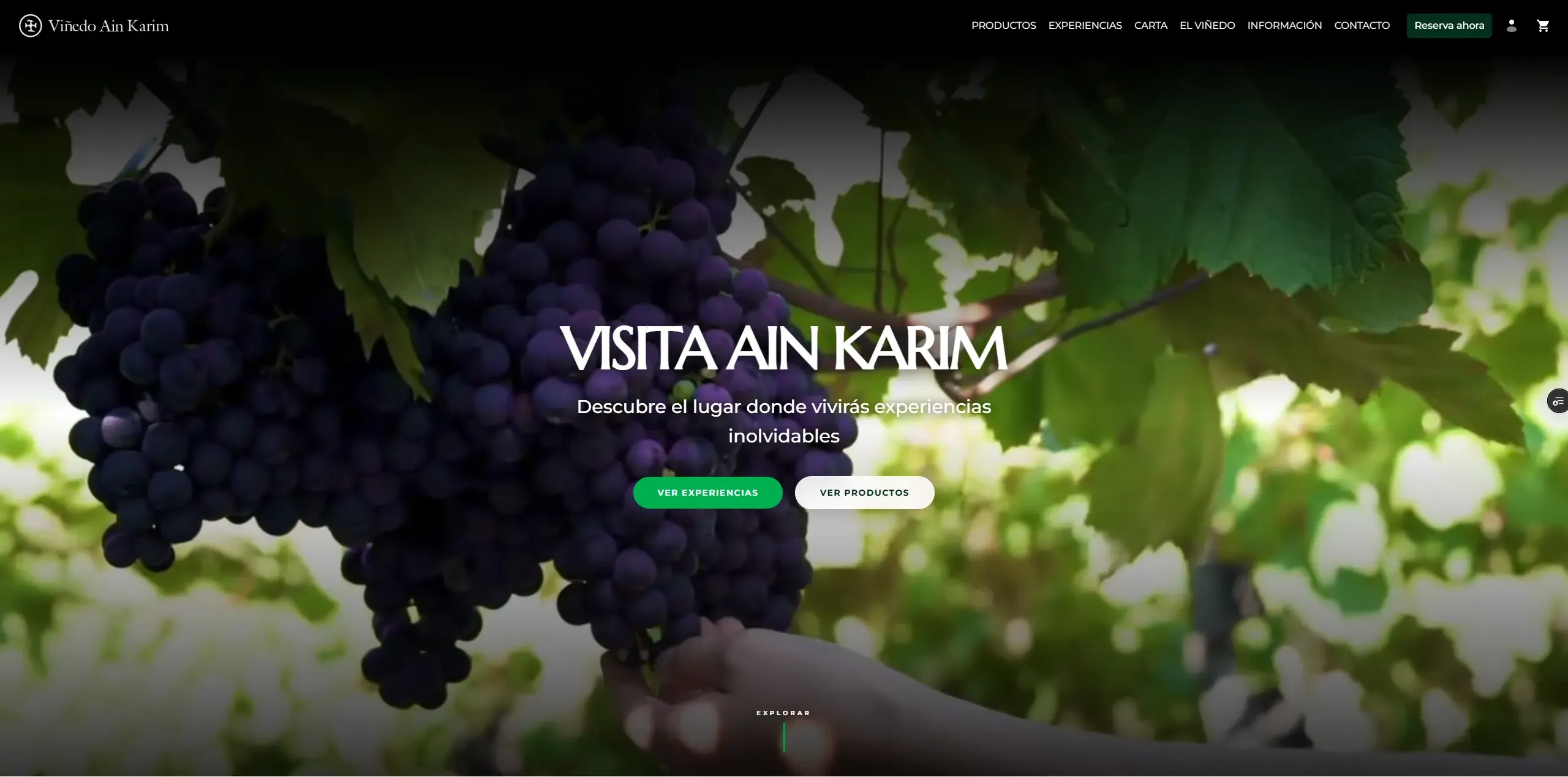
From 2021 we fixed what their WordPress got wrong. In 2025 we moved them to a platform of their own on Next.js and Strapi, where vineyard visits are booked and paid online and the shop takes payment through Mercado Pago.
Results
- Visits booked and paid with no middleman
- Online
- Visit plans, their strongest line, are chosen, paid for and confirmed on the site itself, on a system built for it.
- First positions on Google for their niche
- Top
- Organic traffic grew after the migration and the site shows up in the first positions for searches in their sector.
- Partner terms applied automatically
- Agencies
- Rules for partners such as tourism agencies are applied automatically on every booking, following the business's own criteria.
- From inherited WordPress to a platform of their own
- 2021 → 2025
- Four years keeping the old site running before proposing the change. The migration came when the business needed it.
How it started
Viñedo Ain Karim, in Villa de Leyva, came to us in 2021 with a WordPress that kept causing trouble. They didn’t ask for a new website: they asked for the one they had to work. And that is what we did for four years: fix what broke, keep it standing and learn, along the way, how a business that makes wine and offers visit plans actually runs.
That time matters for what came next. By the time we proposed a new architecture we knew well where the WordPress fell short for them, and the proposal grew out of that.
Why make the jump in 2025?
Of the vineyard’s lines of business, the two that weigh most online are the shop and the experiences, and the stronger one is the latter: tours, tastings, plans to visit the vineyard. That calls for a booking system with availability by date and time slot, capacity limits, different rules and conditions for each plan, payment and confirmation: something a general-purpose WordPress covers with extensions, but only up to a point.
And that was the problem. The system was slow: the database had grown a lot and the queries weren’t optimised, so every request took its time. It also depended on several paid extensions on subscription and, even so, it fell short of what the vineyard needed. Add to that a design that had aged and a shop with so much friction it wasn’t selling. In 2025 the new platform went live.
Bookings first
We built the system on Next.js and Strapi, deployed in Docker containers on infrastructure we manage ourselves. All the business logic lives in Strapi: the plans and experiences, their availability, prices, orders. The vineyard manages them from there without touching code.
Booking a visit happens entirely on the site: pick the experience and the date, pay through Mercado Pago, receive the confirmation. Nobody has to answer a message to close it.
The shop and partner terms
The wine shop runs on the same base: same backend, same payment method, same manageable catalogue, and today it is an active sales channel.
The system also handles terms for partners such as tourism agencies: business rules with several criteria, applied automatically on every booking, with nobody stepping in and no exceptions to correct afterwards.
Search rankings
The new site was built for Google to understand it better than the old one: fast pages, a clear structure, one URL per experience and per product, and a Google Business profile consistent with what the website declares. Organic traffic grew after the migration and today the site shows up in the first positions on Google for searches in its sector.
These are results anyone can check with a simple search.
What comes next
The relationship continues the way it started: support, maintenance and whatever the business needs next. It is a solution that keeps adjusting to how the vineyard changes, with new plans, new rules and new seasons, and the difference is that each adjustment is now built on a platform designed for them, rather than improvised on one that wasn’t.