Neo BrandAdvertising and Print Production
From a landing page that never converted to a channel that brings in leads
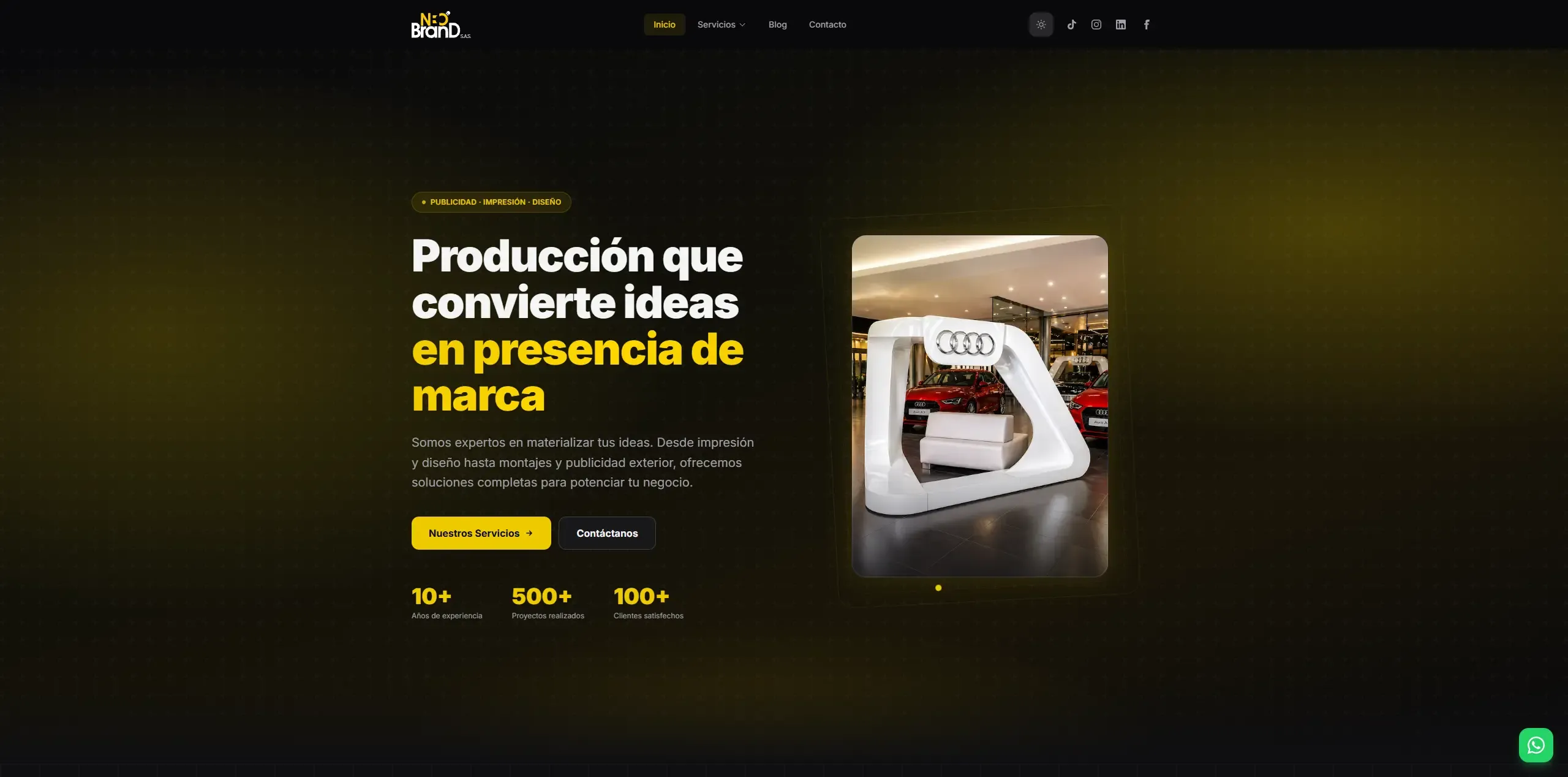
We replaced a landing page that never converted with a static Astro site with one page per service, and we keep working on its local SEO and content.
Results
- Enquiries originating on the site
- From 0
- The previous page generated no contacts. Today the client receives enquiries that come in through its own site.
- Indexable pages
- 1 → 20+
- From a single document to a site with one page per service, articles and custom tools, and still growing.
- Verified local listings
- Google + Bing
- Google Business Profile and Bing Places, carrying the same NAP the site declares.
The challenge
Neo Brand has spent more than a decade producing point-of-sale material, trade show stands, large-format printing and signage for major brands. Online, all of that fit on a single landing page.
One document had to explain six distinct lines of business, and it struggled to explain any of them well. Someone searching for “trade show stand assembly in Bogotá” found no page about stand assembly, and whoever did land there left without submitting an enquiry. There was little to rank and little to measure: the site worked as a brochure, not as a channel.
They came with the problem clear and no technology in mind, and trusted us with the architecture and much of the design.
The technical solution
We rebuilt the site in Astro, a technology that leaves each page finished before it is published, and deployed it on Cloudflare Pages, a network that delivers it from the point closest to whoever is visiting. In practice: when someone arrives there is nothing left to compute, so each page loads almost instantly.
That matters for a simple reason. Someone who needs a print supplier usually searches from their phone, in a hurry: a site that takes its time loses that person, and ranks worse on Google too.
On that foundation we organised the site the way the business is organised: one page per service, plus about, frequently asked questions and contact. Each with its title and description written around what people actually search for.
The ranking work
- Local SEO: Google Business Profile and Bing Places listings configured and verified, with the NAP (name, address and phone) identical to the one the site declares. When those three details disagree across sources, search engines split the signal and no version wins.
- One page per intent: six service pages each competing for its own term, instead of one page competing for all of them at once without standing out for any.
- Structured data: organisation markup with address and contact channel, so the business is understood as an entity rather than loose text.
- Blog: implemented from the first deploy and publishing today. It is where the long tail of keywords gets worked without touching the commercial structure of the site.
- SEO through engineering: beyond content, we build tools into the site, such as an automatic quote calculator, that solve a specific need for the person searching. Each one is a new reason to visit the page and to link to it.
The impact
The site went from brochure to channel: Neo Brand now receives enquiries originating on its own website, where before none came in. And the site went from one page to more than thirty, each with a reason to exist.
What’s next
This is an active relationship. Local SEO work continues, articles keep being published, and we have been adding custom tools that answer specific questions from people looking for a print supplier. Each one is another door a client can walk through.
The infrastructure is built for that: every new service is a new page, and growing in search doesn’t require rebuilding anything.